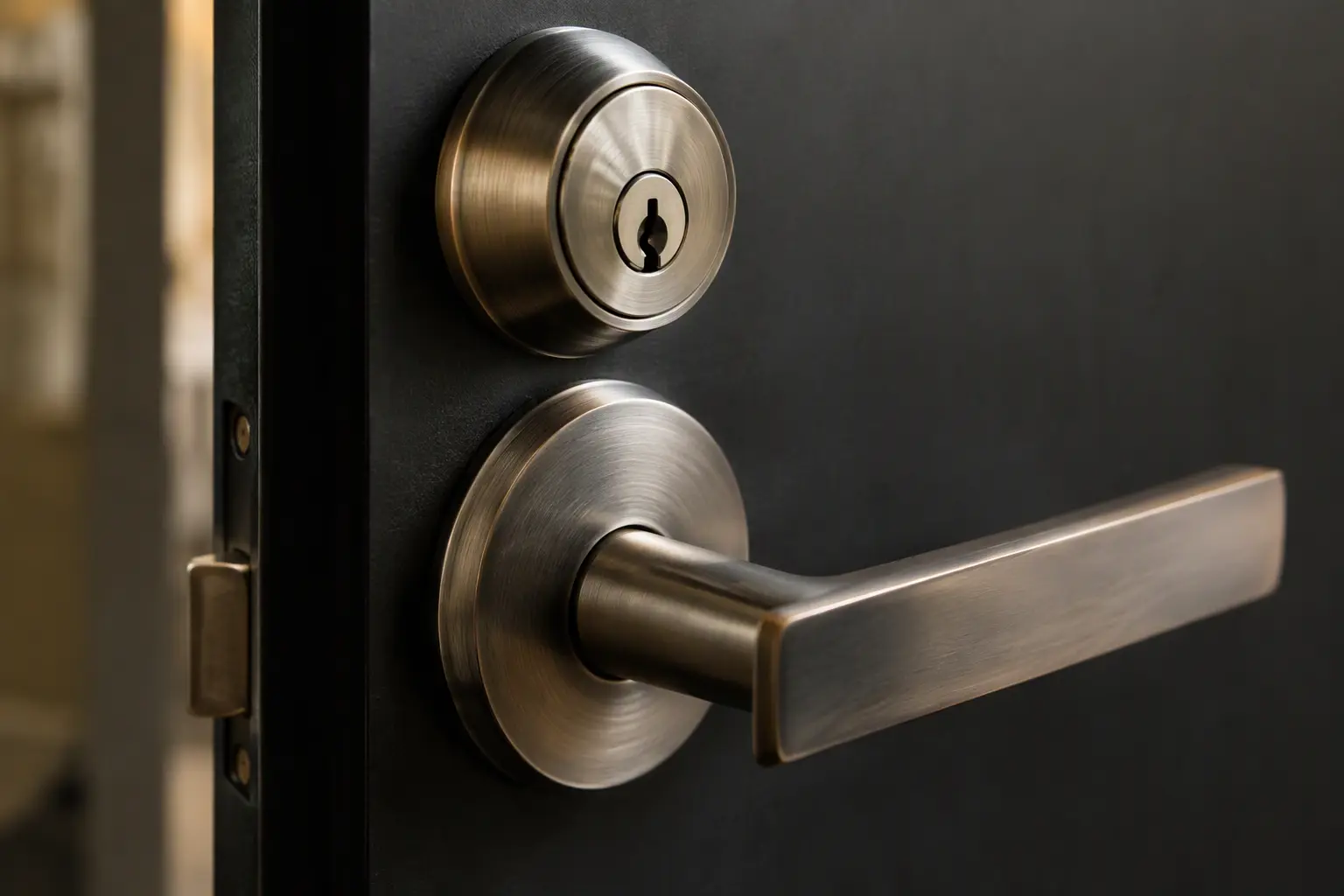
When people call us after buying a home, losing a key or changing tenants, the first thing they usually ask for is "new locks". Sometimes that is exactly right. Often, though, rekeying would do the same job for less money and less disruption. This guide explains the difference between the two, the situations where each makes sense, and the questions to ask yourself before you decide.
The short answer
- Rekey when the locks work well and you simply want old keys to stop working.
- Replace when the locks are worn, damaged, the wrong type for the door, or you want better hardware.
Everything else in this article is about working out which of those describes your doors.
What rekeying does
Rekeying changes the inside of the lock cylinder, not the lock itself. A locksmith takes the cylinder apart, swaps the small pins that match your current key for a new set, and cuts new keys to suit. The old keys stop working the moment the cylinder goes back together.
From the outside, nothing changes. The handle, the deadlock, the finish and the way the door closes all stay the same. You keep hardware that already fits the door, and you only pay for labour, pins and keys. Our lock rekeying page explains the process in more detail.
What replacing does
Replacing means removing the whole lock and fitting a new one. That can be a like-for-like swap into the same holes in the door, or a change to a different type of lock, which may need extra cutting, a new strike plate or filling of old holes.
Replacement costs more than rekeying because you are paying for new hardware as well as labour. In return, you get a fresh mechanism, a chance to change the lock type and, in many cases, better security than the original. See our lock replacement page.
Situations where rekeying is usually right
You have just bought a house
You rarely know how many keys exist for a home you have just bought. Previous owners, their relatives, neighbours, cleaners, trades and real estate agents may all have had copies. If the locks are in good condition, rekeying every external door gives you complete control over keys without replacing sound hardware.
A key has been lost
If a key has gone missing and could possibly be linked to your address, for example lost with a wallet or a car, rekeying the affected locks makes that key useless.
A tenant or staff member has left
For landlords, rekeying between tenancies is quick and economical. For businesses, rekeying after someone leaves answers the question of whether a working key went with them.
You want one key for every door
If your locks use compatible cylinders, they can usually be rekeyed to one key at the same time. That is often the single biggest everyday improvement people notice.
Situations where replacing is usually right
The lock is worn or failing
If a key is hard to turn even after the door has been checked for alignment, if the lock grinds, or if parts are loose inside, rekeying will not fix it. A worn lock rekeyed is still a worn lock. Sometimes a lock repair is possible; when it is not, replacement is the honest answer.
The lock has been damaged
After a break-in or an attempted entry, locks are often bent, cracked or weakened even if they still turn. Replacing them is usually the safest choice.
The door has the wrong kind of lock
A front door with only a spring latch can be slipped or pushed open more easily than a door with a deadlock. If you are unhappy with the type of lock rather than who holds the keys, replacement or an additional lock is the answer. Our article on deadlocks versus deadlatches explains the options.
Parts are no longer available
Some older lock ranges are discontinued, and pins or cylinders can be hard to source. In that case replacement may be the only practical option.
You want a different look or function
New handles, a different finish, a lever instead of a knob for easier use, or a thumb-turn instead of a key on the inside are all reasons to replace rather than rekey.
A mixed approach often works best
Many homes do not need an all-or-nothing answer. A common Castle Hill example: a house has a newer front entry set in good condition, a tired original latch on the laundry door, and a garage door lock that has never quite worked. The sensible plan might be to rekey the front, replace the laundry lock, repair the garage door lock, and key all three alike so one key opens everything.
That kind of plan is usually cheaper than replacing everything and more secure than rekeying everything.
Questions to ask yourself before deciding
- Do the locks turn smoothly with the current key? If yes, rekeying is likely enough.
- Has any lock been forced or damaged? If yes, replace that lock.
- Am I happy with the type of lock on each door? If not, replace or add hardware where you are unhappy.
- Do I want one key for every door? Tell your locksmith before work starts.
- Is this a rental? Check the lease and NSW rules before changing anything. See our guide to landlord and tenant lock change rules in NSW.
How a good locksmith should advise you
A good locksmith will look at the locks before recommending either option, and will tell you plainly if rekeying is enough. Be cautious if someone insists on new locks without inspecting the existing ones, or recommends replacing locks that work perfectly well.
We would rather rekey five good locks and replace the one that needs it than sell you six new locks you did not need. If you want a broader look at the property, our security locksmith service starts with exactly that kind of door-by-door review.
Security: is replacement more secure?
Not automatically. Rekeying gives you the same level of security as the existing lock, with control of who holds keys. Replacement can improve security if the new lock is a better design or a better fit for the door, but a poor lock fitted badly can be less secure than a good old one.
The real security questions are:
- Is there a deadlock on each external door that needs one?
- Does each door close and lock fully?
- Is the strike plate fixed firmly into the frame?
- Do you know who holds keys?
Rekeying answers the last question. The others are about the hardware and the door.
Common questions
Will rekeying make my lock more secure? It makes old keys useless. It does not change the design of the lock.
Can a locksmith rekey any lock? Most common residential and commercial locks, yes. Some restricted high-security systems can only be rekeyed by an authorised supplier.
Can I rekey some doors and replace others? Yes, and new locks can often be keyed to match the rekeyed ones.
How do I know if my lock is worn? A key that sticks even when the door is properly aligned, a grinding feel, or a loose cylinder are common signs.
Talk it through with us
If you are not sure whether to rekey or replace, call Castle Hill Locksmith Service on 02 5023 3726 or request a quote with photos of your locks. We are at 4 Mandala Parade, Castle Hill NSW 2154, open 7 days, 7:00am to 10:00pm, and we will tell you honestly which option suits your doors.
Need a locksmith in Castle Hill?
Call Castle Hill Locksmith Service on 02 5023 3726. Open 7 days, 7:00am – 10:00pm.