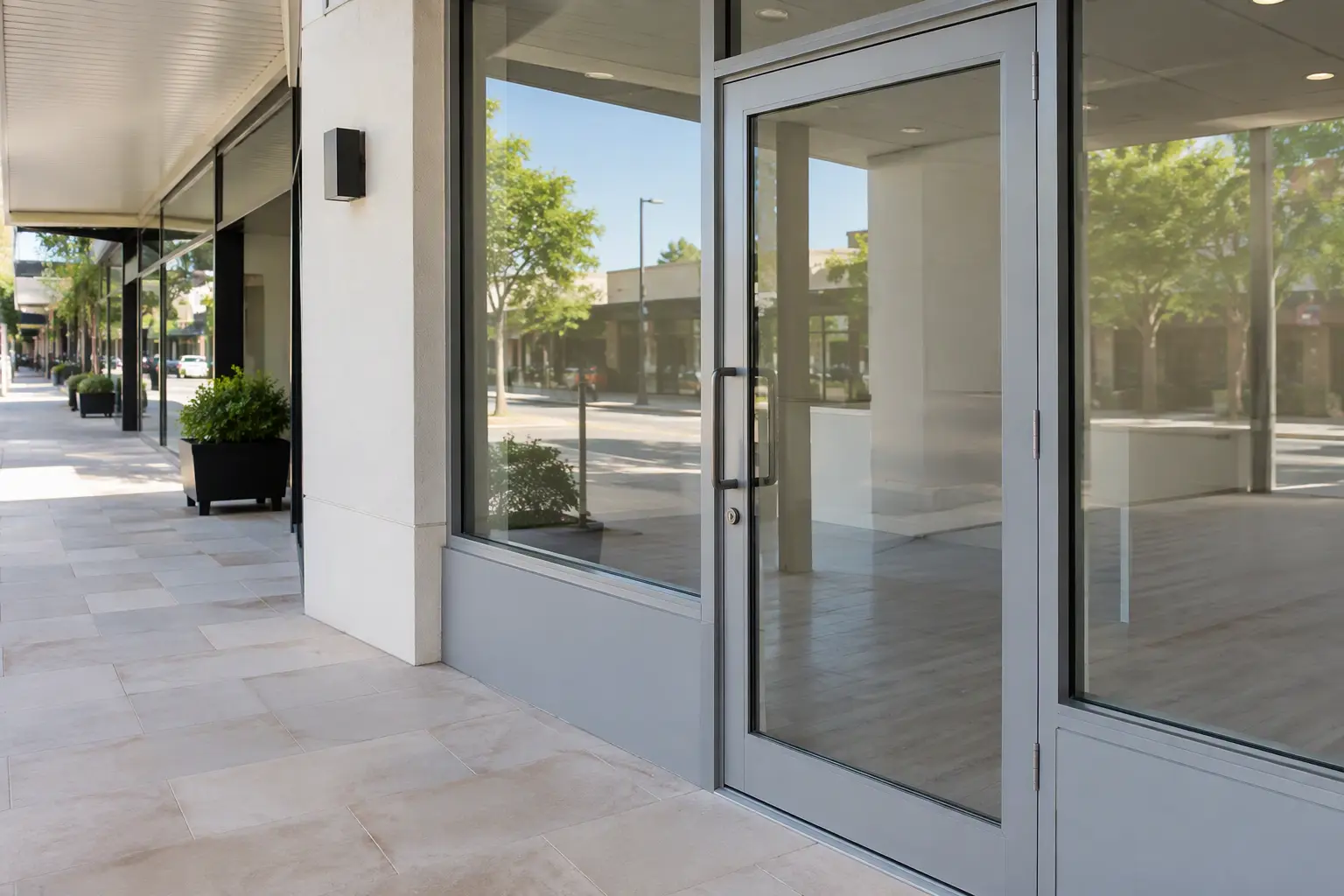
Castle Hill has changed a great deal over the past decade. Where there were once mostly detached houses, there are now apartment buildings around the Metro station on Old Northern Road, near Castle Towers and along Showground Road, with more in Bella Vista and Norwest. Apartment living brings its own security questions. The building has a secure entry, so are you safe already? Who controls the locks? What can you change yourself? This guide answers those questions for owners and renters.
How apartment security is layered
Security in an apartment building works in layers, and each layer has a different owner.
- The building perimeter: the front entry, the car park gate, side doors and fire exits. These are common property, controlled by the owners corporation.
- Shared internal areas: lifts, corridors, mailrooms, storage cages and garbage rooms. Also common property.
- Your own unit door: the lock on your front door is usually part of your lot, and your responsibility.
- Inside your unit: balcony doors, windows and any internal locks.
Knowing which layer a problem belongs to tells you who can fix it. A broken lobby door is a job for the building manager. A stiff lock on your own unit door is yours.
The unit front door
Your front door is the most important lock you control. In newer Castle Hill buildings it is often a solid door with a modern entry set, sometimes combined with a deadlock. Many are fire-rated doors, which matters: fire doors must close and latch properly, and their hardware cannot be changed casually.
Self-locking doors and lockouts
Many unit doors lock automatically when they close. That is good for security, because you cannot forget to lock up. It is also the most common reason for apartment lockouts. Step out to the garbage chute without your keys, let the door close, and you are locked out.
Simple habits help:
- Keep keys on a hook by the door and take them every time you step out.
- Leave a spare with a trusted friend nearby, not under a mat.
- Know whether your building manager holds a key and how to reach them.
If you are locked out, our lockout service can help during our hours, 7 days, 7:00am to 10:00pm.
Fire doors
If your unit door is a fire door, it must close and latch on its own. Do not add hardware, remove the closer or change the lock type without checking with your building manager. A locksmith should check fire-door requirements before fitting anything. A thumb-turn on the inside usually remains necessary so occupants can get out quickly in an emergency.
Rekeying after you move in
When you buy or rent an apartment, you rarely know who else has a key. Previous owners, their family, cleaners, agents and tradespeople may all have had one. Rekeying the unit door cylinder makes every old key useless. Our lock rekeying page explains the process.
In some buildings, the unit door key also opens the lobby, car park or mailbox, using a master key system. If so, rekeying may need to be done through the building's key supplier so your key keeps working on common doors. Ask your building manager before booking.
Common property: what you cannot change
Owners and tenants cannot change locks on common property. The lobby door, car park, bin rooms and storage areas belong to the owners corporation, and changes are made through the strata committee or building manager.
If a common-property lock is faulty, report it to the building manager in writing. If it creates a security risk, such as a car park gate that will not close, say so. Most buildings treat that as urgent.
Balcony and sliding doors
Ground-floor and first-floor apartments often have balconies or courtyards that can be reached from outside. Sliding doors to those areas are a common weak point because many rely on a simple latch.
Options include:
- a keyed lock on the sliding door
- a secondary lock or bar to stop the door being forced
- an anti-lift device so the door cannot be lifted off its track
For units on higher floors, balcony doors matter less for intruders, but may matter for children. See our sliding door locks guide.
Windows and child safety
NSW has rules for window safety devices in strata buildings, aimed at preventing young children from falling. Owners corporations generally need to make sure that certain windows above a set height above the ground or floor below cannot open more than a limited amount, or are fitted with a compliant safety device. Check the current requirements with NSW Fair Trading. Our article on window safety locks in NSW explains more, and our window locks page covers fitting.
Storage cages and mailboxes
Storage cages in basement car parks are often secured with a simple padlock. A better-quality padlock with a shrouded shackle is a sensible small upgrade, if your building's rules allow. Mailbox locks are usually the owner's responsibility within a common bank; check with your building manager before replacing one.
Keys and access control in newer buildings
Many newer buildings use fobs or access cards for the lobby and car park, with a key for the unit door. Treat fobs like keys:
- report a lost fob to the building manager straight away so it can be deactivated
- do not lend fobs to people you would not give a key to
- check how many fobs are registered to your unit when you move in
Apartment security checklist
- Rekey your unit door when you move in.
- Check whether your key works on common doors before rekeying.
- Know whether your door is a fire door, and do not alter it without checking.
- Secure ground-floor and accessible sliding doors.
- Check window safety devices if you have young children.
- Upgrade your storage cage padlock.
- Report faulty common-property locks in writing.
- Account for every key and fob.
For landlords of apartments
If you own an investment unit, rekeying the unit door between tenancies is good practice. Check whether the building uses a master key system first, as that affects who can do the work. Our guide to landlord and tenant lock change rules in NSW covers the tenancy side.
Common questions
Can I change my unit door lock? Usually, yes, as long as it is not a fire door with special requirements and does not affect a building master key system. Check with your building manager.
Who fixes the lobby door? The owners corporation, through the building or strata manager.
Can you rekey my unit door? Yes, unless your building's key system requires its own supplier. We check that first.
Is a self-locking door secure? It is convenient and secure against forgetting to lock up, but a deadlock adds strength when you are away, where fire rules allow.
Help with apartment locks
Castle Hill Locksmith Service works on unit doors, balcony doors and windows across Castle Hill, Bella Vista and Norwest. Call 02 5023 3726, open 7 days, 7:00am to 10:00pm, or request a quote. We are at 4 Mandala Parade, Castle Hill NSW 2154. Read more about our security locksmith and residential locksmith services.
Need a locksmith in Castle Hill?
Call Castle Hill Locksmith Service on 02 5023 3726. Open 7 days, 7:00am – 10:00pm.