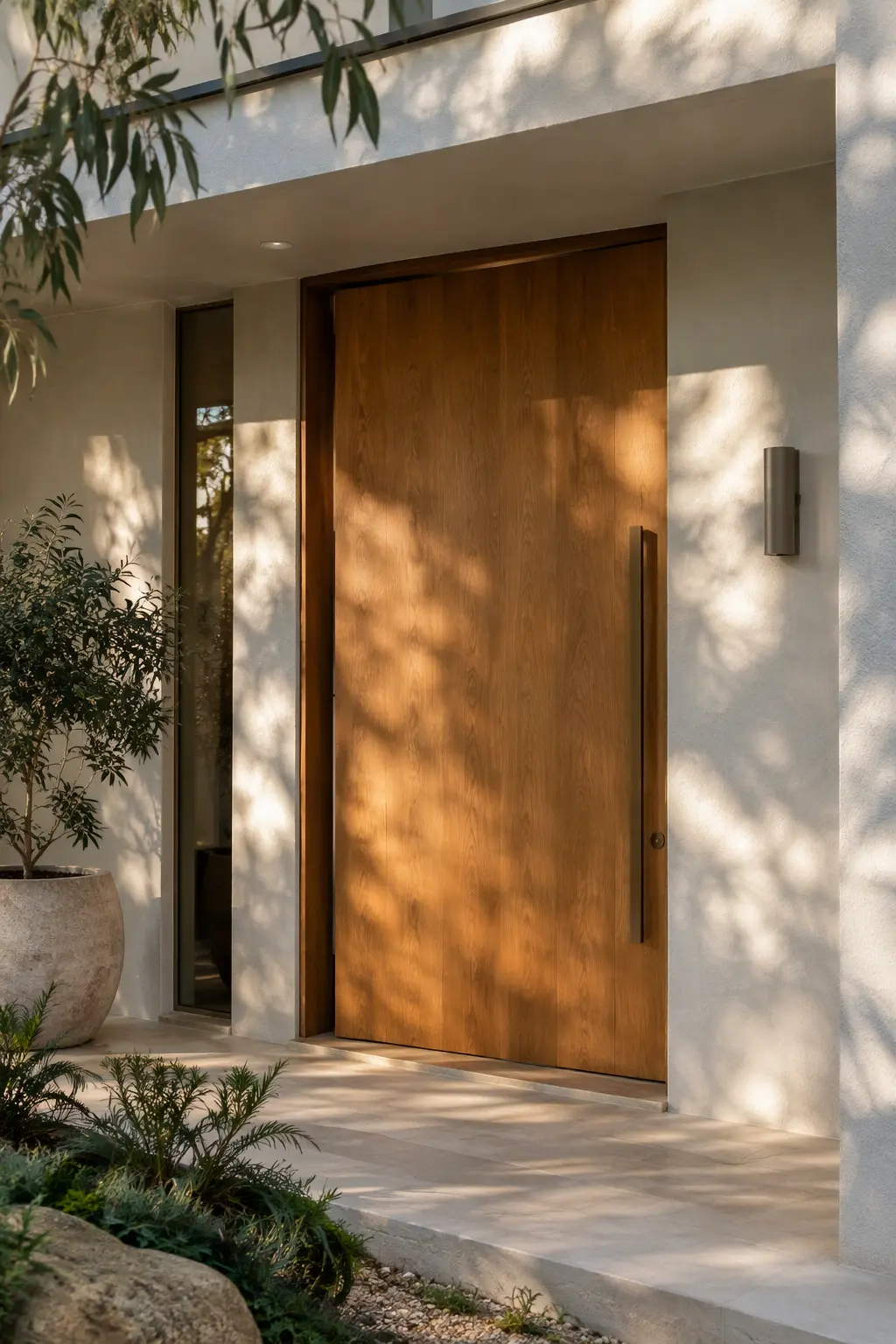
Large parts of the Hills District were built in the 1960s, 70s and 80s. Drive through the older streets of Baulkham Hills, Castle Hill and Cherrybrook and you will see solid brick homes with timber front doors, many of which still carry their original locks or early replacements. That hardware was often well made and can keep working for decades. It also comes with its own quirks. This guide explains how to look after the locks on an older home, how to tell whether a lock should be serviced or replaced, and how to improve security without losing the character of the door.
What you typically find on older Hills homes
Rim locks and night latches
A rim lock is fixed to the inside face of the door, with a cylinder passing through to the outside. A night latch is the most common type: turn the key or inside knob and the latch retracts. Many older homes still have one on the front door, sometimes as the only lock. They are simple and usually easy to service, but on their own they are a spring latch, not a deadlock.
Mortice locks
A mortice lock sits inside a pocket cut into the edge of the door. Older mortice locks often use a lever key rather than a cylinder key. They can be strong, but older lever designs vary a lot in quality, and parts may be hard to find.
Knob sets
Round door knobs with a key in the centre were common for decades. They are convenient but typically offer limited security on their own.
Original deadlocks
Some homes had deadlocks fitted early on. Many still work well; some have worn to the point where the bolt does not fully throw.
Why older locks start to stick
When an older lock becomes hard to use, the lock is often not the main problem.
Timber movement
Solid timber doors absorb moisture in humid Sydney summers and dry out in winter. Over decades, houses also settle slightly. Both change how the door sits in its frame. When the door moves, the bolt or latch no longer meets the strike plate squarely, so locking feels stiff or only works if you lift or push the door.
The fix is often adjusting or moving the strike plate, tightening hinges or easing the door, rather than replacing the lock. Our lock repair service always checks the door before blaming the lock.
Worn cylinders and keys
Keys wear down over years of use, and so do the pins in the cylinder. A worn key in a worn lock can turn unreliably. Having a new key cut from the lock's code or an original key, rather than copying a worn copy, often helps.
Dirt and old lubricant
Years of household oil, dust and grit build up inside locks. Avoid adding more oil. A dry lock lubricant is better, and a lock that remains stiff should be serviced.
Paint
Painting a door without removing or masking the hardware is very common. Paint in the latch, strike or cylinder can make a lock stick or stop it working.
Service or replace?
Servicing is usually worth it when
- the lock is a good-quality original
- the problem is stiffness rather than broken parts
- the door can be adjusted to meet the lock properly
- you want to keep the look of the original hardware
Replacement is usually better when
- the lock is cracked, bent or has failed internally
- parts are no longer available
- the lock is a basic latch and you want a deadlock
- the lock has been damaged in a break-in
We will tell you honestly which applies. We would rather service a good old lock than replace it unnecessarily. Our guide to whether to rekey or replace covers the same decision for newer locks.
Improving security on an older front door
Many older front doors rely on a night latch alone. That keeps the door closed but can be vulnerable to force or slipping. Options include:
Add a deadlock
Fitting a separate deadlock above or below the existing latch is the most common upgrade. The night latch remains for daily use; the deadlock adds strength at night and when you are away. Our article on deadlocks versus deadlatches explains the options, and our door lock installation service covers fitting.
Strengthen the strike plate
On older timber frames, strike plates are often small and fixed with short screws. A heavier strike fixed with long screws into the framing behind the jamb makes a big difference for little cost.
Check the door itself
A lock is only as strong as the door. Solid timber doors are generally fine. Thin panels or hollow-core doors may need reinforcement before a strong lock is worthwhile.
Keeping the character of the door
Some owners love the look of their original hardware and want to keep it. That is usually possible.
- Keep the original lock for appearance and daily use, and add a discreet modern deadlock for security.
- Choose new hardware in a finish that matches the original, such as brass or bronze.
- Have worn original locks serviced rather than replaced.
- Keep removed original hardware, in case a future owner wants it.
If your home is heritage-listed or in a conservation area, check with Hills Shire Council before changing visible external hardware or doors.
The forgotten doors on older homes
On older homes, the front door has often been upgraded at some point, while side, laundry and back doors still carry their original latches. These secondary doors are frequently the weakest point on the house, especially when they open onto a side passage out of view.
Look at:
- the laundry door, often a half-glazed door with a basic latch
- the back door
- the door from any attached garage or carport store
- side gates
Our security locksmith service reviews every door, not just the front.
Windows on older homes
Older aluminium sliding windows and timber sash windows often have no locks, or locks that have been painted over and seized. Adding keyed locks to ground-floor windows at the back and side of the house is a simple improvement. Our article on window safety locks in NSW covers the options.
Keys for older locks
Older locks may use keys that are not available at every key-cutting counter, particularly lever mortice locks. If you only have one key for an older lock, get a spare cut by a locksmith while the original is still in good condition. Copying a worn copy produces a worse key each time.
Simple maintenance for older locks
- Use a dry lock lubricant once or twice a year, not household oil.
- Keep hinges tight so the door does not drop.
- Mask or remove hardware before painting.
- Do not force a stiff key; it may snap.
- Fix small sticking problems early.
- Keep at least one good original key.
Common questions
Is my old lock still secure? It depends on the type and condition. A night latch on its own is less secure than a deadlock. We can check yours.
Can old locks be rekeyed? Many can, particularly cylinder locks. Some older lever locks are harder, and replacing the lock may be more practical.
Will a new lock look out of place? It need not. New hardware comes in finishes that suit older doors.
Why does my door lock fine in winter but not in summer? Timber swells with humidity. Adjusting the strike plate usually fixes it.
Help with older locks
Castle Hill Locksmith Service works on older homes across Castle Hill, Baulkham Hills and Cherrybrook. Call 02 5023 3726, open 7 days, 7:00am to 10:00pm, or request a quote with photos of your locks. We are at 4 Mandala Parade, Castle Hill NSW 2154. Read about our lock replacement service too.
Need a locksmith in Castle Hill?
Call Castle Hill Locksmith Service on 02 5023 3726. Open 7 days, 7:00am – 10:00pm.